
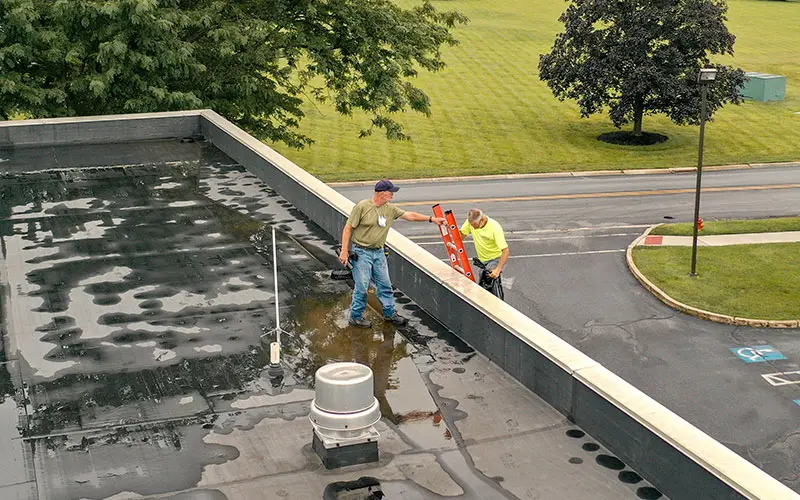
A SAFER START WHEN WATER COMES IN
First, keep people away from hazards
When water enters a working building, the immediate concern is its effect on people and operations. Call Richard L. Sensenig Co. at (717) 733-0364 and explain the property location, the affected area and a reliable callback number. The company offers 24-hour emergency roof repair, but availability and the practical response depend on the situation. Calling directly allows the team to discuss the next step rather than leaving an urgent concern in a general inquiry queue.
More to consider
If there is immediate danger, follow your emergency procedures and contact the appropriate emergency responders. Water near electrical equipment, a sagging ceiling or signs of structural distress require qualified assessment. Do not enter an affected area, climb onto a wet roof or touch equipment to collect more information. Roof repair coordination is not a substitute for addressing a life-safety hazard. Only share observations that can be made from a safe location.
Help us understand where water is appearing
Describe where water is visible inside and what is beneath it. A leak above an empty corridor has different operational implications from water above food processing, electrical equipment or stored goods. Give room names, building identifiers or nearby fixed features so the location can be understood. Explain whether the leak is continuing, intermittent or associated with a particular weather event. These details help establish the situation without asking anyone to diagnose the roof themselves.
More to consider
Have access information available, including the site contact and any restrictions on entry. If the property contains several buildings, explain which one is affected and where a responding team should report. Roof history, warranty documents and earlier repair records are useful if readily available, but do not delay reporting an urgent problem while searching for paperwork. Photographs can support the conversation when they are taken safely and identified with the correct location and time.
Separate immediate protection from lasting repair
Conditions during the initial response influence what is possible. Weather, access and roof condition may limit investigation or repair methods. Ask whether the proposed work is temporary stabilization, a permanent repair or an initial investigation requiring follow-up. Understanding that distinction prevents a temporary measure from being mistaken for a completed long-term solution. Request clarity about any areas that still need attention and what the next visit is intended to establish.
More to consider
A recurring leak may involve more than a visible opening. Water can travel through the assembly before appearing indoors, and earlier repairs may not have addressed the full source. Once immediate concerns are controlled, review whether a broader inspection is appropriate. That review can connect seams, flashings, drainage and surrounding materials with the symptom. A replacement decision should follow the roof’s condition and the scope of the problem, not simply the stress of the emergency.
Use the repair history to plan what comes next
Keep a record of the event, the areas affected and the work completed. Include safe photographs, dates and the recommendations for follow-up. Share available warranty information so applicable notification and repair requirements can be considered. If insurance is involved, ask your insurer what documentation it requires; the roofing team’s observations do not determine policy coverage. Distinguish building-content concerns from the roofing scope so each responsible party understands what remains to be addressed.
More to consider
Review recent rooftop activity before closing the issue. Equipment servicing, new penetrations or changes in drainage can provide useful context for the investigation. For properties with repeat calls, a planned maintenance record may be more useful than a series of disconnected emergency invoices. Discuss how inspection findings and service history can support the next budget decision. The goal after an urgent visit is a clear follow-up path, not an assumption that every future leak risk has disappeared.
Separate the immediate response from follow-up work
START WITH A DIRECT CALL
Tell us what is happening, from a safe place
Keep people clear of wet electrical equipment and damaged ceilings. Do not climb onto a wet or unsafe roof. Call to discuss the situation, availability and next steps.
- Call (717) 733-0364 with the exact property and building location.
- Describe what is affected without entering an unsafe area.
- Provide a site contact, callback number and access restrictions.
- Keep the distinction between temporary work and permanent repairs on record.
Not an active leak? Send a non-emergency roof repair request.
A few questions before you get started
Does 24-hour service guarantee an arrival time?
No. Call with the location and conditions so the team can discuss availability and the next steps. Weather, access and the situation affect what can be done and when.
Should our maintenance team go onto the roof?
Do not send untrained or unequipped staff onto a roof to find a leak. Share observations from safe locations and coordinate roof access with the responding team.
Is the leak directly above the ceiling stain?
Not necessarily. Water may travel along parts of the roof assembly or building before it becomes visible. Interior locations are useful clues, not proof of the entry point.
Will the first visit resolve everything?
The possible scope depends on the conditions. Clarify whether the work is temporary stabilization, a permanent repair or an investigation that requires follow-up. Keep any recommended next steps on record.
Should I have the roof warranty available?
Yes, if readily available. Share warranty and prior repair records so notification and repair requirements can be considered. Do not delay addressing an immediate safety hazard while looking for paperwork.
Can a roof be repaired during any storm?
Not every condition permits safe access or the same repair methods. Weather, visibility and the roof condition affect what the team can do. Call to discuss the situation rather than assuming an immediate rooftop repair is always possible.
Will you determine whether insurance covers the leak?
Insurance coverage is determined by the policy and insurer, not by a service-page description. Keep records of the event and completed work, and ask your insurer what it needs. Roofing observations can support documentation without guaranteeing a claim outcome.
What should we do when the leak stops on its own?
Report the timing and retain the location information. A leak stopping after rainfall does not establish that the underlying issue is resolved. Discuss whether investigation or follow-up is needed before the next weather event, especially if the concern has happened before.
If your next step involves another service
Looking for guidance closer to home? Find your community.