
UNDERSTAND YOUR OPTIONS. PLAN YOUR NEXT STEP.
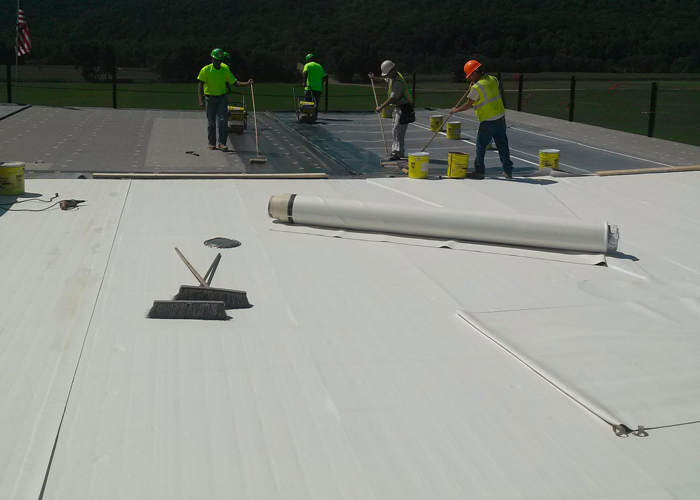
Choose the membrane around your building’s use
TPO and PVC are thermoplastic single-ply roofing materials, but they are not the same product under different names. Both can be used in white membrane systems with heat-welded seams. The selection should begin with the building’s exposure and intended assembly, not color alone. Share what the facility does, which equipment exhausts onto the roof and whether oils, grease or other contaminants may reach the surface.
More to consider
Sensenig identifies PVC as an option for restaurants and food-processing facilities because of grease resistance. That is a starting point for a compatibility discussion, not permission to ignore the actual exhaust or maintenance conditions. The proposed manufacturer’s requirements and the specific substances involved still need review. For other facilities, compare TPO and PVC alongside insulation, attachment, drainage and access so the decision reflects the whole roof rather than a single product characteristic.
Look at how the seams will be joined
The open field of a membrane is only one part of the work. Seams, curbs, drains, pipes and perimeter transitions determine how the roof connects around interruptions. Ask how the proposed scope addresses these areas and how the installation will be checked. Existing equipment can create access constraints during replacement, so its service requirements should be discussed before the roofing sequence is finalized.
More to consider
Plan future equipment changes early. A new exhaust, replacement HVAC unit or revised service route can change flashing and protection needs. Coordination is easier before the roof is completed than after another trade cuts into a finished system. Keep a record of the selected materials and completed details for later repairs. TPO and PVC require compatible repair approaches; identifying a roof only as a white membrane is not enough information for maintenance decisions.
Bring insulation and drainage into the comparison
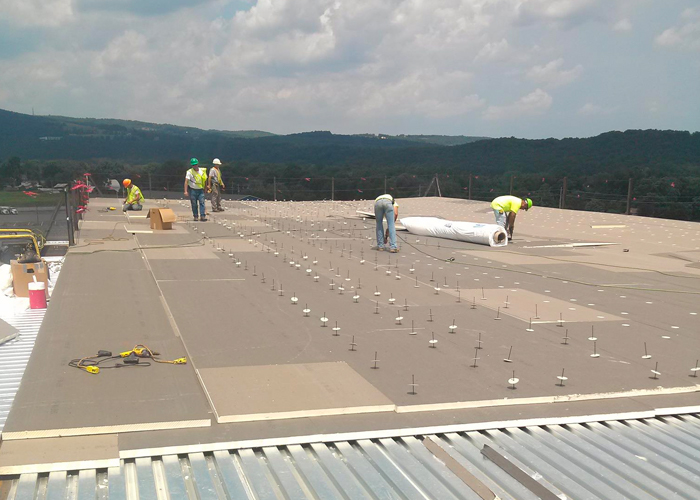
A reflective roof surface can reduce solar heat absorption and may support cooling performance. The Department of Energy also explains that climate, insulation and heating needs affect annual results. A Pennsylvania facility should consider winter heating along with summer cooling. Buildings with different occupancy, HVAC and process loads can experience different outcomes even with similar-looking roofs. Avoid assigning a utility savings percentage without a building-specific basis.
More to consider
Use replacement planning to review insulation and moisture management at the same time as membrane selection. The existing assembly, interior conditions and proposed changes affect the design conversation. A white surface is not a substitute for insulation, and insulation alone does not answer every condensation question. If energy or interior humidity is a major driver, explain that objective early so the appropriate design input and scope can be established.
Plan for the building to stay in use
For a restaurant, warehouse or production facility, roof work must be coordinated with the operation beneath it. Identify air intakes, loading doors, sensitive processes and times when access is restricted. Discuss tear-off, staging and temporary protection in the proposal. Where equipment needs to be moved or serviced, define which contractor is responsible and how that work fits the sequence. An assumed handoff between trades can become a project delay.
More to consider
After installation, keep warranty information, system identification and repair records accessible. Explain the roof access rules to visiting trades and record changes when new equipment is added. Compare proposals on these practical details as well as membrane specifications. A complete scope should address the condition of retained materials, treatment of penetrations and maintenance expectations. The best choice for the building is the one that connects those requirements clearly, not simply the one with the most familiar acronym.
TPO and PVC selection: start with the exposure
LET’S TALK THROUGH YOUR PROJECT
Start with what you know about your roof
You do not need to diagnose the problem or choose a system before getting in touch. These details help us understand what matters to you.
- Identify kitchen or process exhaust and substances reaching the roof.
- Bring existing roof records, warranties and equipment plans.
- Mark service routes, air intakes and operational restrictions.
- Ask how seams, flashings, insulation and retained materials are addressed.
A few questions before you get started
Is TPO the same material as PVC?
No. They are different thermoplastic membranes, even though both are commonly used as white low-slope roofing. Exposure, compatibility and assembly requirements help determine the appropriate choice.
Why consider PVC for a restaurant roof?
Grease exposure from kitchen exhaust is an important selection factor, and PVC is often used in these applications. Review the actual discharge and selected product’s compatibility rather than assuming every PVC product covers every exposure.
Will a white roof lower our energy bills?
It can reduce solar heat gain, but savings are building-specific. Insulation, HVAC efficiency, operating hours and winter heating needs all affect the annual result. Avoid assigning a savings percentage without an appropriate analysis.
Can we install a new membrane over the old roof?
Possibly, subject to existing conditions and applicable requirements. Moisture, substrate suitability, roof layers and attachment need investigation before a recover scope is chosen.
What should we discuss if equipment is being replaced too?
Share equipment locations, curb changes, penetrations, service routes and the installation sequence. Coordinating the trades can help avoid opening or modifying a newly completed roof without a planned detail.
Can TPO and PVC repair materials be used interchangeably?
Do not assume so. Identify the installed membrane and follow the applicable repair requirements. Similar appearance does not establish material compatibility. Keep system information available so future maintenance is based on the actual roof rather than its color.
What should a food-processing facility discuss before reroofing?
Explain exhaust, interior conditions, sanitation requirements and production schedules. Identify sensitive areas and equipment that may affect access. Coordinate the roofing scope with the facility’s operating procedures rather than assuming a membrane choice alone addresses those concerns.
Does a thicker membrane eliminate maintenance?
No. Membrane specification is one part of the system. Flashings, drainage, service traffic and later equipment work still need attention. Compare the complete assembly and written care requirements instead of treating thickness as a substitute for routine roof management.
If your next step involves another service
Looking for guidance closer to home? Find your community.