
UNDERSTAND YOUR OPTIONS. PLAN YOUR NEXT STEP.
Find out how EPDM fits your building
EPDM is a synthetic-rubber membrane used in low-slope roof assemblies. For an owner comparing commercial roofing options, the important question is how the complete assembly fits the building. The membrane works with insulation, attachment, the substrate and perimeter details. An existing EPDM roof should be reviewed for condition and repair history before deciding whether the next investment is targeted repair, broader work or replacement.
More to consider
Share the building’s use and the consequences of a roof interruption. A warehouse, office and process facility may have different priorities even when their roof areas look similar. Identify rooftop equipment, service routes and planned changes. If a proposal focuses only on membrane thickness or a warranty term, ask how it addresses the remaining assembly. Those headline specifications do not describe moisture condition, drainage performance or the quality of the connections around the roof.
Give seams and flashing the attention they need
Seams and flashings connect the field membrane to the roof’s most interrupted areas. Drains, curbs, pipes, walls and edges deserve close attention when investigating a leak. An interior stain is a clue rather than proof of the entry point, because water can travel before appearing below. Previous repair materials and work by other trades are important context. Ask how the proposed repair will integrate with the existing system rather than treating every sealant or patch as interchangeable.
More to consider
Compatibility matters when maintaining a rubber roof. The appropriate repair approach depends on the existing material, condition and applicable system requirements. Keep product information and repair records available for future service. If the roof is under warranty, discuss notification and authorized-work requirements before assuming any contractor or material can be used without consequence. A repair that addresses the immediate symptom should also be documented so recurring concerns can be reviewed in context.
Look beneath the membrane to the full assembly
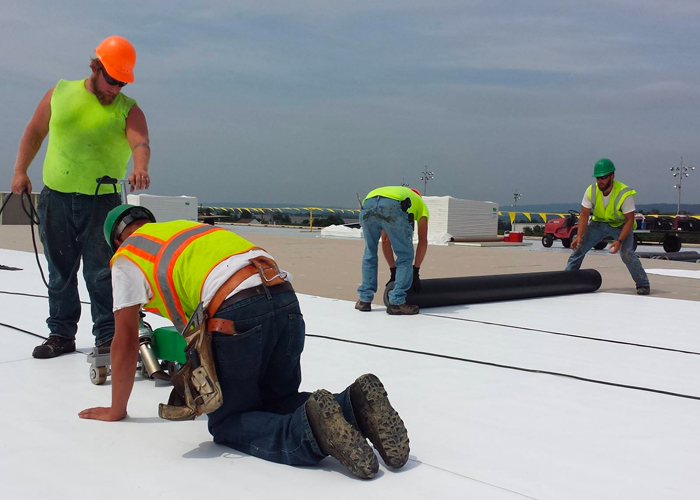
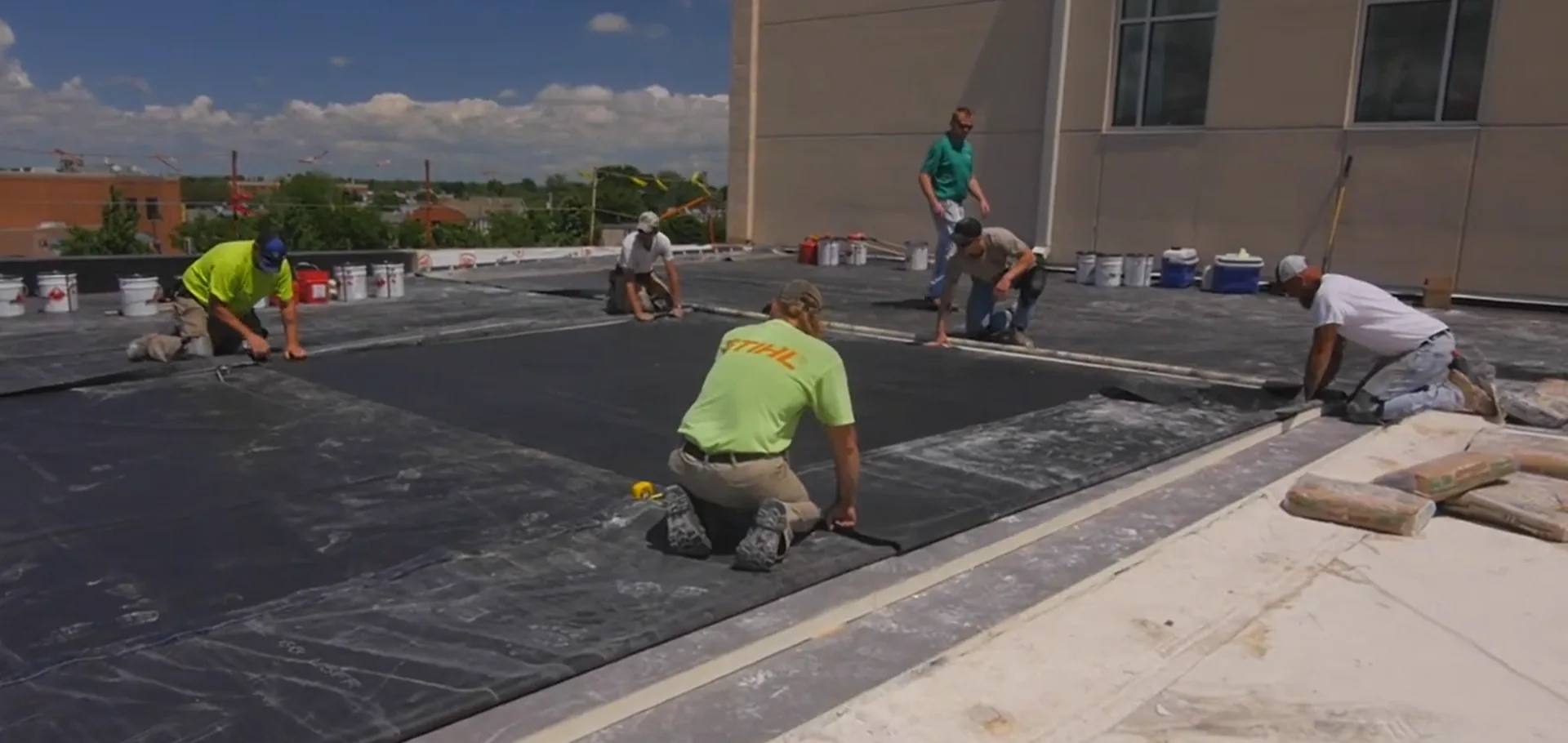
A new membrane does not automatically resolve the conditions below it. Review the insulation, deck and moisture findings that affect the proposed scope. Where materials are unsuitable to remain, removal or other corrective work must be identified. If a recover approach is considered, ask what supports that decision and what remains concealed. A replacement comparison should make clear whether proposals include the same substrate preparation and treatment of existing layers.
More to consider
Drainage also belongs in the assembly discussion. Low areas, drains and transitions can influence both performance and maintenance. Insulation choices may affect thermal performance and the height of connections to curbs and edges. Attachment requirements depend on the selected system and project conditions. These are coordinated decisions, not independent upgrades to be added after the membrane is chosen. Ask for the proposed approach to be explained as a complete roof.
Then compare EPDM with the alternatives
EPDM, TPO and PVC are distinct materials with different seam and detailing approaches. Compare them against the same building requirements: exposure, insulation, drainage, access and maintenance. Where exhaust or contaminants reach the roof, identify the actual substances so compatibility can be reviewed. A white membrane’s reflectivity can affect solar heat absorption, but it should not be treated as a universal reason to reject or select a roof system without evaluating annual building conditions.
More to consider
For an occupied property, compare the work plan as well as the finished assembly. Tear-off, material staging, roof access and coordination with equipment can influence operations. Ask what is included in the warranty and what the owner must maintain after completion. Keep the closeout documents accessible to facilities staff. A useful purchase decision considers the installation, the details and future care, rather than reducing the comparison to a single material label or promised lifespan.
Questions to settle in an EPDM roofing proposal
LET’S TALK THROUGH YOUR PROJECT
Start with what you know about your roof
You do not need to diagnose the problem or choose a system before getting in touch. These details help us understand what matters to you.
- Identify the roof system, installation date and warranty if known.
- Share seam repairs, leak locations and rooftop equipment changes.
- Ask which existing layers the proposed scope retains or removes.
- Compare drainage, flashing, access protection and maintenance requirements.
A few questions before you get started
Is EPDM the same as a rubber roof?
EPDM is a synthetic rubber membrane used in low-slope roofing. It is one component of the roof assembly, alongside insulation, attachment, flashing and the supporting substrate.
Can an existing EPDM roof be repaired?
Often a localized problem can be evaluated for compatible repair, but the surrounding condition matters. Repeated repairs or suspected moisture may justify a broader assessment before more patching.
Can the existing insulation stay in place?
That depends on its condition and the proposed assembly. Moisture, damage, attachment and project requirements need review. Do not assume an overlay is suitable simply because the roof looks intact from above.
How does EPDM compare with TPO or PVC?
Compare exposure, building use, assembly requirements and maintenance alongside the membrane. TPO and PVC are thermoplastic options with different uses; PVC is often considered where grease exposure is a factor. No material is the best fit for every property.
What affects the replacement price?
Roof size is only one factor. Tear-off, insulation, concealed repairs, access, drainage, perimeter work and equipment details can all affect scope. Ask for those items to be clear when comparing proposals.
Can EPDM be installed over an existing roof?
A recover decision depends on existing layers, moisture, substrate condition and applicable requirements. Ask what investigation supports retaining the assembly. Do not assume an overlay is suitable solely because the visible surface appears intact.
Should HVAC contractors coordinate with the roofer?
Yes. Equipment work can introduce penetrations, damage or changed access patterns. Share the equipment scope before work begins and confirm how roofing details and warranty responsibilities will be handled. Keep the completed changes in the roof record.
Is a longer warranty always a better EPDM proposal?
Not by itself. Compare coverage, exclusions, maintenance obligations and the assembly actually included. A warranty term does not explain how wet materials, drainage or flashing are addressed, and it is not a prediction of the roof’s exact service life.
If your next step involves another service
Looking for guidance closer to home? Find your community.