
UNDERSTAND YOUR OPTIONS. PLAN YOUR NEXT STEP.
Start with what the roof needs to do for your building
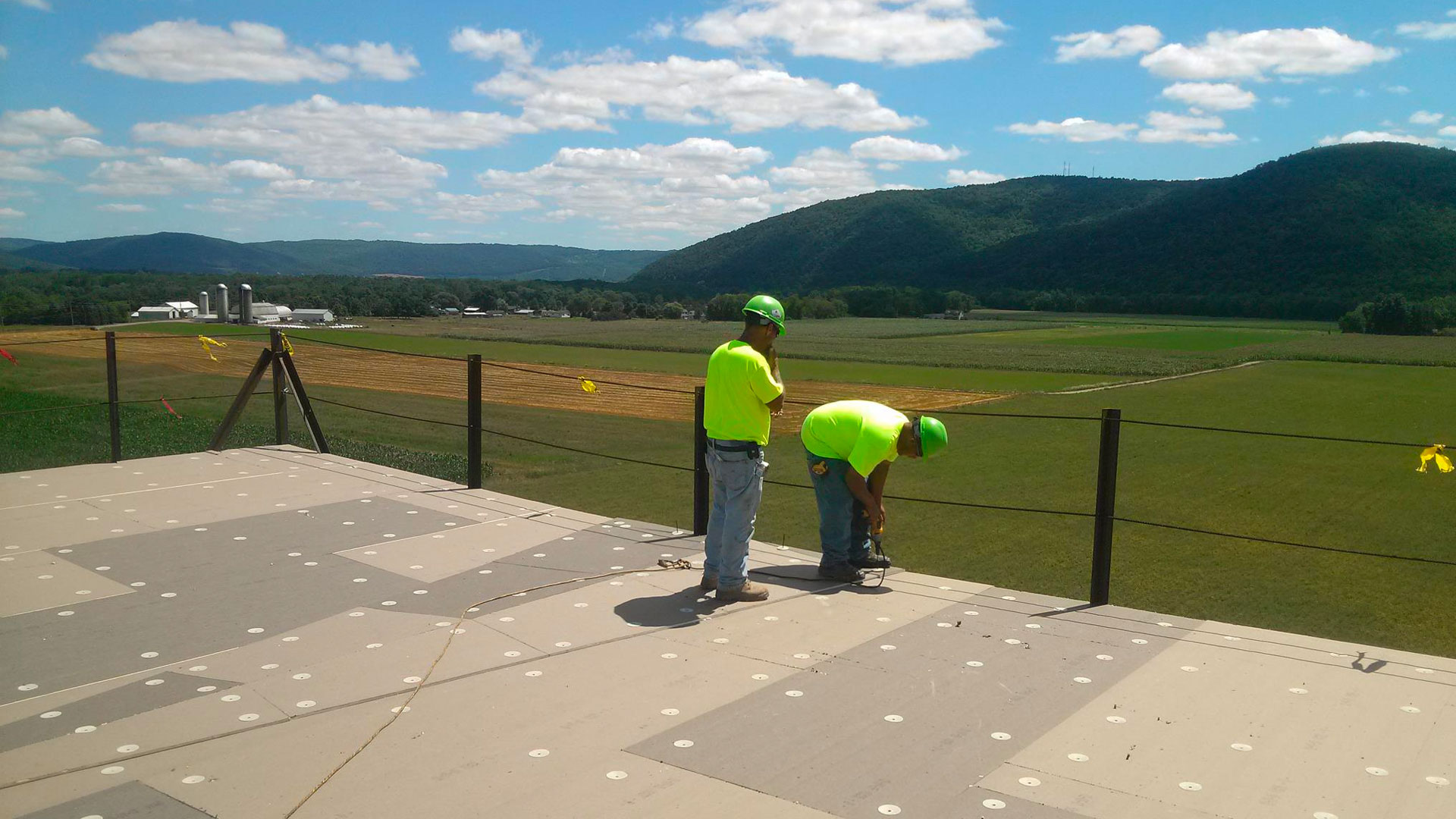
A low-slope roof protects the operation below it while managing water, equipment and regular service access above. Before comparing materials, look at the existing condition and what prompted the conversation: an active leak, repeated repairs, a renovation or a planned replacement.
More to consider
If the roof has several sections, assess their ages and conditions separately. A localized problem may need a targeted repair rather than replacement of every area. Where deterioration is widespread, compare the complete replacement scope with what continued repairs would leave unresolved.
Then compare the whole assembly, not just the membrane
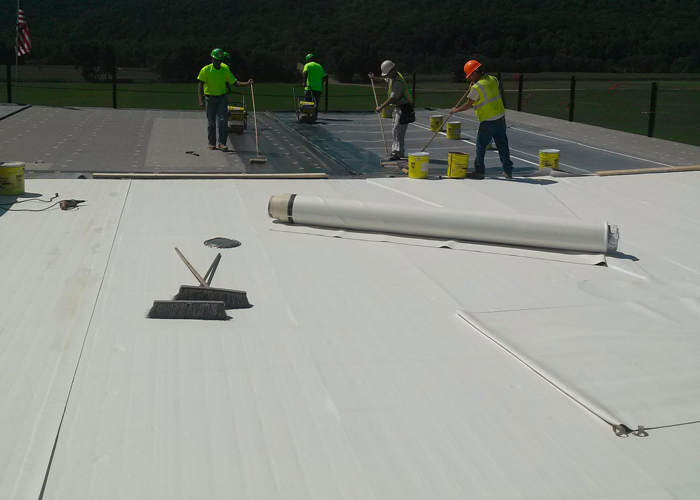
EPDM, TPO, PVC and built-up systems are options for different applications. The useful comparison includes the deck, insulation, attachment, drainage and perimeter details. A membrane name alone does not tell you how a roof will perform on your building.
More to consider
EPDM is a rubber membrane with its own seam and flashing methods. TPO and PVC use heat-welded seams, but they are not interchangeable in every exposure. Identify kitchen or process exhaust and confirm material compatibility for the specific application before selecting a system.
Give water a reliable path off the roof
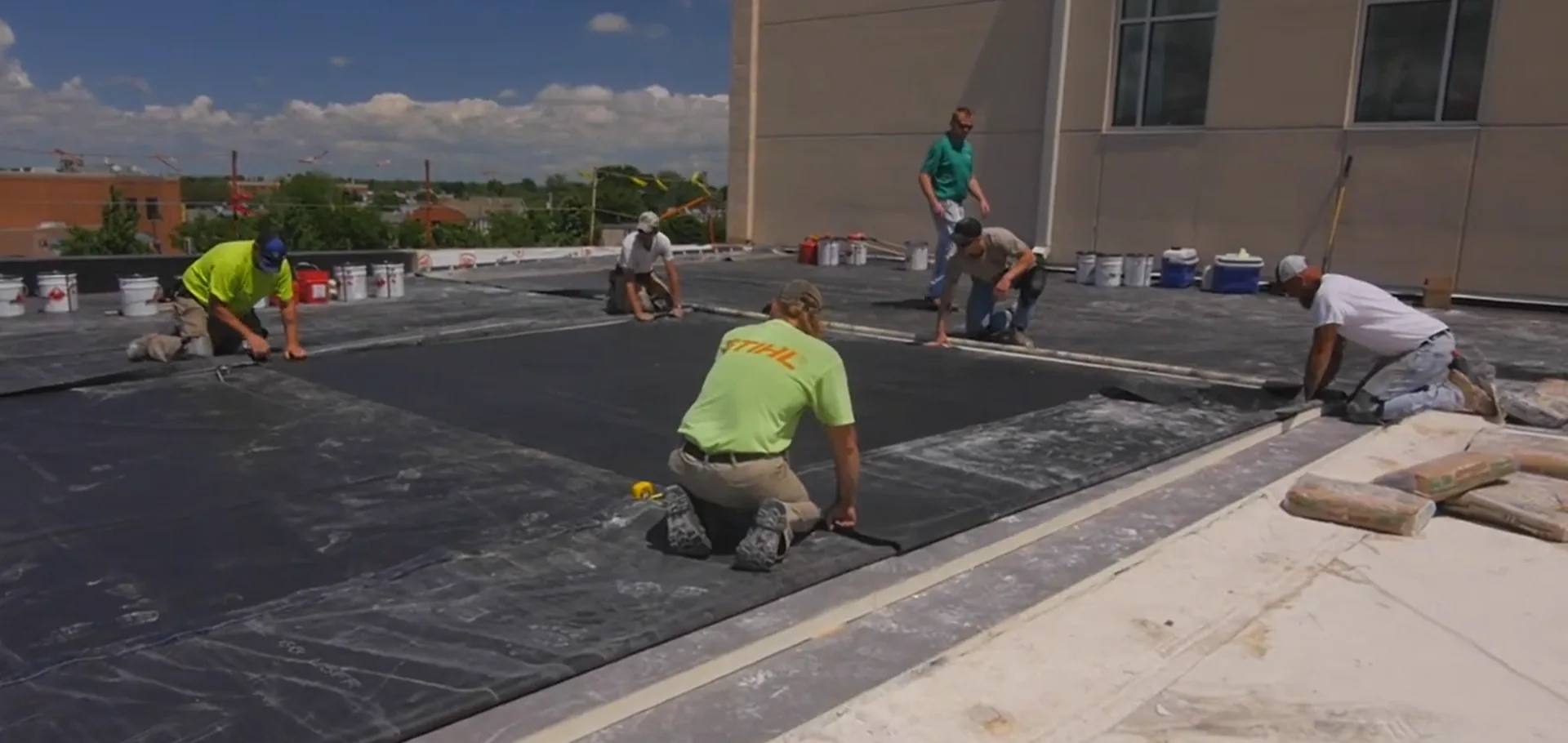
Low-slope does not mean water should remain indefinitely. Drains, scuppers, gutters and the slope of the assembly work together. If ponding or recurring leaks are part of your concern, ask how the proposal addresses those conditions rather than simply adding a new covering.
More to consider
Equipment curbs, wall transitions and roof edges also need coordinated details. Bring proposed HVAC or other rooftop changes into the discussion before the roof is finished, so new work does not immediately disturb the completed system.
Build a work plan around the people inside
Share the entrances, loading areas and sensitive operations that need protection. The work sequence should explain material storage, tear-off, temporary weather protection and communication about restrictions. That makes the scope easier to understand before work begins.
More to consider
After completion, keep the roof drawings, product information, warranties and service records together. Coordinate future work by other trades and plan inspections around the roof’s condition and manufacturer requirements. Maintenance supports the investment; it is not a guarantee of a fixed service life.
Choose the next step from the condition, not the age alone
LET’S TALK THROUGH YOUR PROJECT
Start with what you know about your roof
You do not need to diagnose the problem or choose a system before getting in touch. These details help us understand what matters to you.
- Known roof sections, installation dates and past repairs
- Leak locations, drainage concerns and equipment changes
- Access restrictions, occupied hours and your decision deadline
A few questions before you get started
What is a low-slope roof?
A low-slope roof has a shallow pitch, not a steep profile. It still needs a deliberate drainage path. The membrane, insulation, deck, drains and flashings work together; choosing a surface material alone does not define the roof system.
Should a restaurant consider PVC instead of TPO?
PVC is worth discussing for restaurants and food-processing facilities because of its grease resistance. Share what exhaust reaches your roof and how the building operates. Sensenig can help you consider membrane options alongside the actual exposure and assembly requirements.
Does a leak mean the roof must be replaced?
Not necessarily. A localized flashing or seam problem may be repairable. Repeated failures, moisture in the assembly and widespread deterioration call for a broader assessment. Compare a defined repair scope with the condition of the roof that would remain, rather than choosing solely by the number of leaks.
Can a coating replace missing insulation or fix poor drainage?
No. A coating is a surface treatment, not a replacement for deteriorated structure or an adequate drainage design. Existing condition, moisture, adhesion and material compatibility need evaluation before a coating is proposed. Ask which repairs and preparation are included in the scope.
Will a white membrane lower our energy bill?
A reflective surface can reduce solar heat gain. The result for your building also depends on insulation, HVAC, climate and how the space is used, including winter heating needs. Consider the surface and insulation together when planning a roof for energy performance.
Can work be planned around an occupied building?
Yes, your operations belong in the planning conversation from the start. Share working hours, sensitive production areas, ventilation intakes and loading routes. Review phasing, access and temporary protection with the team so you understand how the proposed work will affect your building and can prepare your staff or tenants.
What should we ask about the warranty?
Bring any existing warranty to the first discussion. For a new system, review the proposed manufacturer, coverage term and maintenance requirements alongside the roofing scope. Understanding both material and workmanship coverage helps you know what protection comes with your investment and how to care for it.
What should we bring to the first conversation?
Have the property address, roof drawings, installation dates, leak history, past repair records and warranty documents available if you have them. Add plans for new rooftop equipment and your budget timing. Missing records do not prevent an initial conversation; they identify what the assessment needs to establish.
If your next step involves another service
Looking for guidance closer to home? Find your community.